

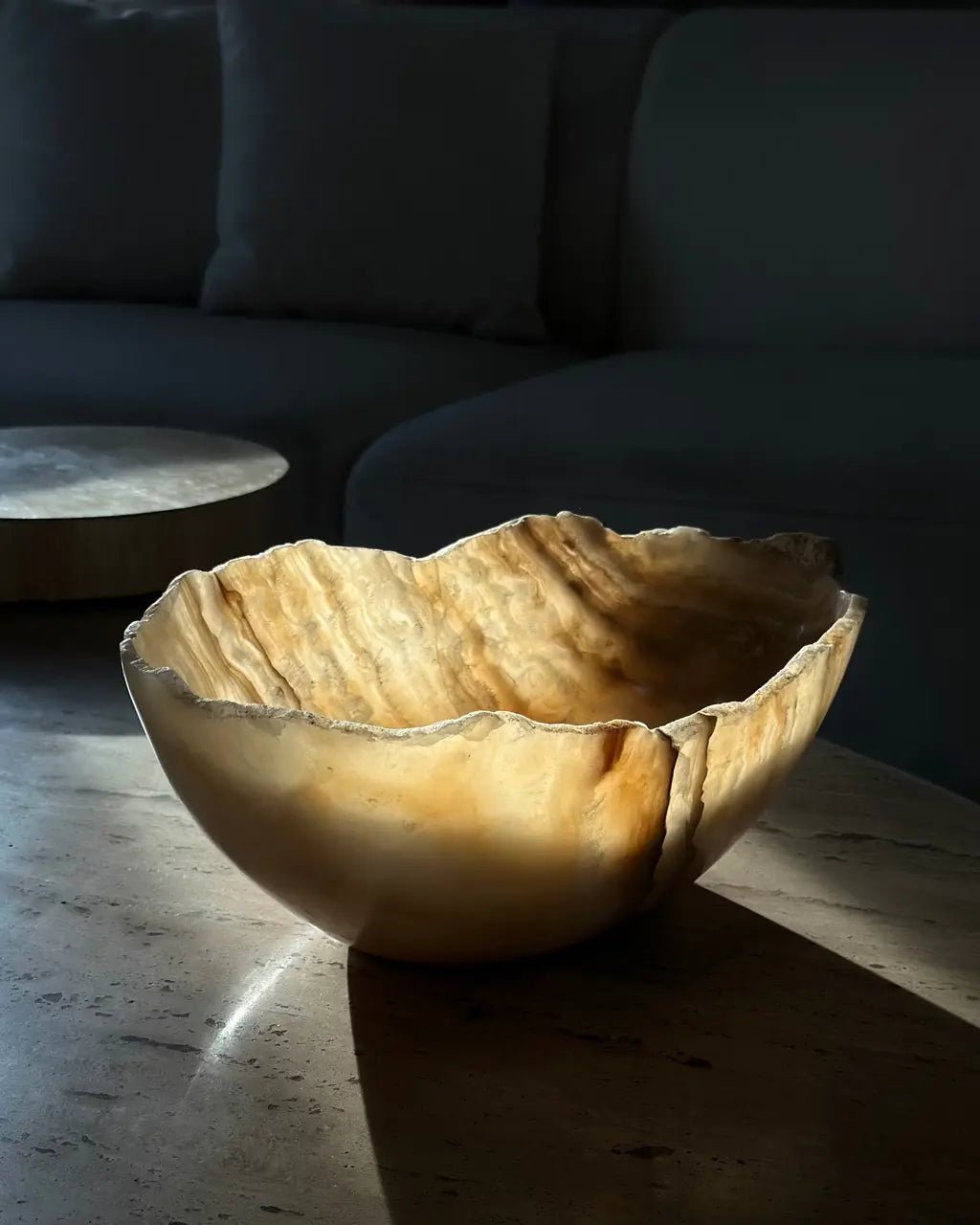
A decorative bowl can give a console, coffee table or shelf a focal point. Start with where it will sit, then choose a material and shape that work with the surrounding pieces. This guide explores eight materials, from marble and ceramic to glass and stoneware, to help you find the right look for your space.
Ready to choose a piece? Explore our decorative bowls and pedestals.
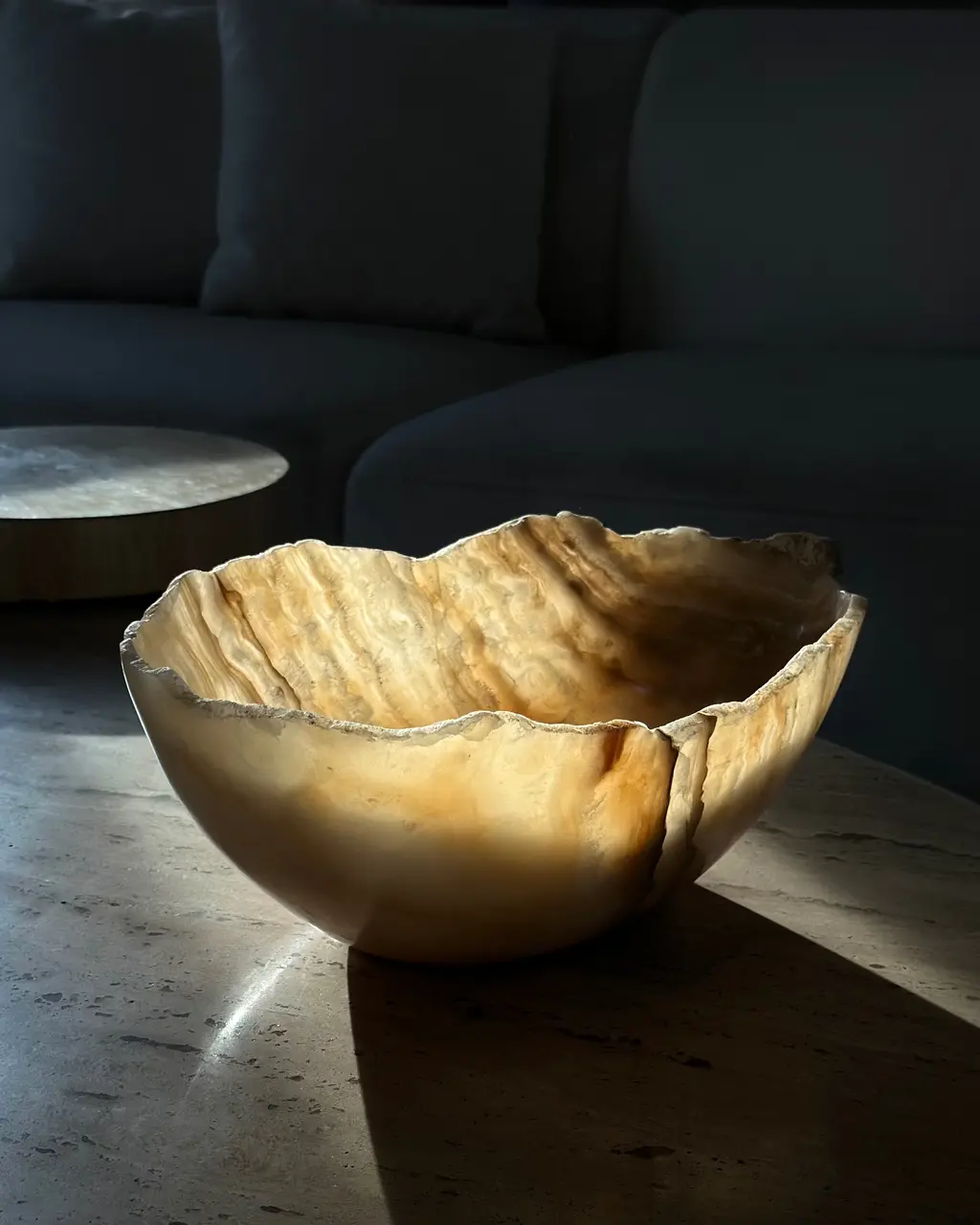
The options below include both materials and surface finishes. Use them to compare the look you want, then check the individual bowl’s dimensions and care instructions.
1 Marble
Marble brings natural veining to a tabletop. A shallow bowl can serve as a catchall without adding much height to an arrangement. Our Natural Marble Key Ring Bowl measures 10 inches across and 2.5 inches high. Its color and pattern vary from piece to piece.
2 Handcrafted ceramic
Ceramic offers a wide range of shapes and surface textures. For a larger decorative piece, the Rocco Earthenware Bowl measures 16.5 inches wide and 4.25 inches high. Hand-shaped ceramic spheres around its rim make the outline part of the design. Rocco is intended for decorative use only; keep it away from excessive moisture.
3 Glass
Clear glass lets the surface beneath it remain visible; colored glass adds another tone to an arrangement. Compare the bowl’s shape and transparency with nearby objects. Check whether the piece is designed for decorative display, water or food before deciding how to use it.
4 Wood
A wooden bowl introduces grain and warm color. Compare its finish with nearby furniture: you can echo an existing wood tone or choose a contrasting one. Follow the maker’s care instructions, especially where water, food or cleaning products are concerned.
5 Metallic glazed ceramic
A metallic glaze is a surface finish rather than a separate bowl material. It can pick up the tone of brass, bronze or other metal accents in a room. Check the underlying material and cleaning guidance; a decorative metallic finish should not be assumed suitable for food.
6 Crystal
Cut or faceted crystal creates a different effect from a smooth, clear bowl. Place it where you can appreciate its shape without crowding it with other reflective objects. Check the piece’s weight and the stability of the surface before choosing a position.
7 Enamel finishes
Enamel adds color or pattern to the material beneath it. Use the finish as a starting point for the rest of the arrangement, repeating one color in nearby objects if you want a coordinated look. Check the maker’s guidance for cleaning and intended use.
8 Stoneware
Stoneware is a type of ceramic. Its form, glaze and texture can range from simple and matte to glossy and patterned. Compare the actual piece rather than relying on the material name alone, and confirm whether it is decorative or suitable for serving.
Choosing and styling a decorative bowl
What size decorative bowl should I choose?
Measure the surface where it will sit. Leave room for the objects you use every day, such as a lamp on a console or books on a coffee table. Check both the bowl's width and height before ordering.
What can I put in a decorative bowl?
Style it on its own to show its shape, or use it for small decorative objects. Follow the individual product's guidance before adding food, water or anything that could mark the finish. A decorative bowl should not be assumed to be food-safe.
Where should I place it?
Try a console, coffee table or open shelf. A simple arrangement gives the bowl space to stand out; keep neighboring objects low enough that you can still see its shape.
Find your next piece in our decorative bowls and pedestals collection.


